Posts

Can Antibiotics Increase the Risk of Arthritis?

Image
Rheumatoid arthritis (RA) is an autoimmune disorder that causes inflammation of the joints. RA is a chronic and progressive condition that causes debilitating effects on the patient. The condition is characterized by pain and stiff joints. Another typical feature of this disorder is bone and joint destruction and the presence of autoantibodies in the serum and synovial fluid. Synovial fluid is the fluid that lubricates the synovial joints. What causes rheumatoid arthritis? The exact mechanism by which patients develop RA is unknown; however, a combination of genetic and environmental factors is likely. Autoimmune antibody production is proposed to be the main mechanism responsible for bone and joint destruction, and the related RA pathology. Infections, hormonal alterations, and stress are some potential triggers of RA. Recent research suggests an association between antibiotic use, gut microbiota changes, and RA flares. Antibiotics and the gut microbiota Antibiotics are widely u...

Bacteria can survive under antibiotic exposure by developing a biological timer

Image
Hebrew University of Jerusalem researchers showed that when exposed to repeated cycles of antibiotics, bacteria evolved a new adaptation by remaining dormant for the treatment period. The results show for the first time that bacteria can develop a biological timer to survive under antibiotic exposure. With this new understanding of how bacteria evolve survival strategies, scientists could develop new approaches for slowing the evolution of antibiotic resistance. The ability of microorganisms to overcome antibiotic treatments is one of the top concerns of modern medicine. The effectiveness of many antibiotics has been reduced by bacteria's ability to rapidly evolve and develop strategies to resist antibiotics. Bacteria achieve this by specific mechanisms that are tailored to the molecular structure or function of a particular antibiotic. For example, bacteria would typically develop drug resistance by evolving a mutation that breaks down the drug. Researchers at the Hebrew Uni...

Antibiotic-resistant bacteria could help clear antibiotic contamination

Image
Antibiotics include a vast array of drugs that can kill bacteria or prevent them from multiplying. They are prescribed for numerous conditions arising from bacterial infection and can also be used prophylactically before major surgery or immune suppression. Consequently, antibiotics are among the most frequently prescribed drugs in healthcare. Although antibiotics play an important role in medical practice, they have been overused in recent years and this has led to many of the bacteria they are designed to destroy becoming resistant to them. Although new antibiotics have been discovered, bacteria are continually mutating and more antibiotic-resistant strains develop. In addition, vast quantities of antibiotics are ending up in the environment via pharmaceutical waste and livestock feed, further increasing the risk of antibiotic resistance. Recently, it was discovered that some antibiotic-resistant bacteria actually ate the antibiotics designed to kill them. The mechanisms ena...

New compound which kills antibiotic-resistant superbugs

Image
Superbugs are as of now a significant worldwide danger, yet health specialists anticipate that the dangers will deteriorate in the following barely any decades. Impervious to most normally utilized anti-infection agents, these microscopic organisms are amazing and are anticipated to execute a bigger number of individuals worldwide than disease by 2050. In this way, scientists are dashing to discover a fix before this projection becomes reality. Presently, a group from the University of Sheffield and Rutherford Appleton Laboratory may have discovered an answer with their disclosure of another aggravate that can murder anti-toxin safe superbugs. A New Compound For Superbugs: In an examination distributed in the diary ACS Nano, scientists uncover that a recently created compound has experienced testing in the lab. During tests, it effectively murdered anti-toxin safe gram-negative microscopic organisms, for example, E. coli. Gram-negative microorganisms, referred to cause conta...

Proper disposal of leftover medication can help reduce antibiotic resistance

Image
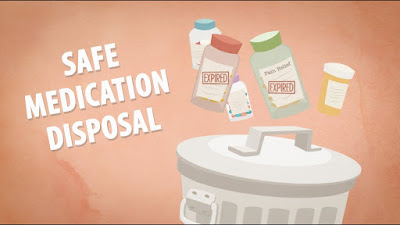
Proper disposal of leftover medication, particularly antibiotics and opioids, can help reduce antibiotic resistance, prevent children from being poisoned and stop the misuse of addiction-forming drugs. But a telephone survey conducted by researchers at UC San Francisco found that fewer than half of California pharmacies provided disposal instructions meeting U.S. Food and Drug Administration guidelines, and just 10 percent followed the FDA's preferred recommendation to take back unused medications from their customers. Over a two-month period in early 2018 researchers posing as parents of children who had recently had surgery spoke to employees at nearly 900 pharmacies in California and asked them what to do with two leftover medications: the antibiotic Bactrim (sulfamethoxazole-trimethoprim), and liquid Hycet (hydrocodone-acetaminophen), a pain reliever containing an opioid compound. Neither medication should be left in the medicine cabinet, since the antibiotics could be ...

Modifying a cancer drug has created a new agent for multi-resistant infections

Image
Researchers from the Technical University of Munich (TUM) and the Helmholtz Center for Infection Research (HZI) in Braunschweig have modified an approved cancer drug to create an agent that is effective at treating multi-drug-resistant infections. The agent has so far only been tested in mice, but the researchers are planning to optimize it further so it can enter the clinical development phase. The urgent need for new antibiotics Antibiotic-resistant bacteria are increasingly causing severe and deadly infections. Methicillin-resistant Staphylococcus aureus (MRSA) causes a persistent infection that can sometimes be resistant to various different antibiotics, and new drugs that are effective against it are urgently needed. Director of the Infection Immunology Research Group at HZI, Eva Medina, says the industrial development of new antibiotics is stalling and not keeping pace with the spread of antibiotic resistance. A new approach to developing antibiotics ...

Without Action, Drug-Resistant “Superbugs” Will Kill Millions....

Image
Antibiotic resistant infections could kill 2.4 million individuals in Europe, North America, and Australia by 2050 moving forward without any more activity to battle the diseases, as indicated by a report discharged by the Organization for Economic Cooperation and Development. Fig .1 implies, What is Antibiotics Resistance * "Drug-resistant superbugs are on the ascent worldwide and speak to a principal danger to worldwide wellbeing and advancement. The situation is getting worse because of the shortage of new antibiotics. But what if we changed the way we aim to treat them, and trained our cells to kill these invaders instead of relying on antibiotics to do the dirty work? This new strategy, called host-targeted defense, could help to solve antibiotic resistance problem. More than 23,000 people die every year due to multidrug-resistant pathogens and cost the country around $55 billion per year. The main culprits threatening the U.S. are methicillin-resistant Staphyl...